Trim, Door & Staircase Painting
Trim, door and staircase painting in Jasper, Indiana
Trim and doors take more handling than any other painted surface in a house. Baseboards get kicked, door edges get grabbed, and stair spindles catch every bump from the vacuum. We paint them in enamel that holds up to that, and spend most of our time on what you notice later: caulk lines, straight edges and clean cuts against stained wood.
Trim, Door & Staircase Painting in Jasper, Huntingburg, Ferdinand, Dale, Holland and across Dubois County.
Scope
What’s included
Every estimate spells out the surfaces, the prep and the cleanup, so you know what you’re paying for.
- 01Baseboards, shoe molding and quarter round
- 02Window and door casing, crown molding
- 03Interior doors, both faces and all edges
- 04Steel and fiberglass entry doors
- 05Spindles, risers, stringers and newel posts
- 06Handrails painted or cut in against stain
- 07Fireplace mantels and surrounds
- 08Cracked caulk cut out and recaulked
- 09Hinges and hardware removed or masked
Caulk lines and cutting in against stained wood
Most of the difference between a good trim job and a sloppy one is at the edges. Before painting, we cut out cracked caulk where trim meets the wall and run new beads along baseboards, casing and crown. Gaps open up as a house settles and the wood moves with the seasons, and a gap that just gets painted over shows up again a few months later.
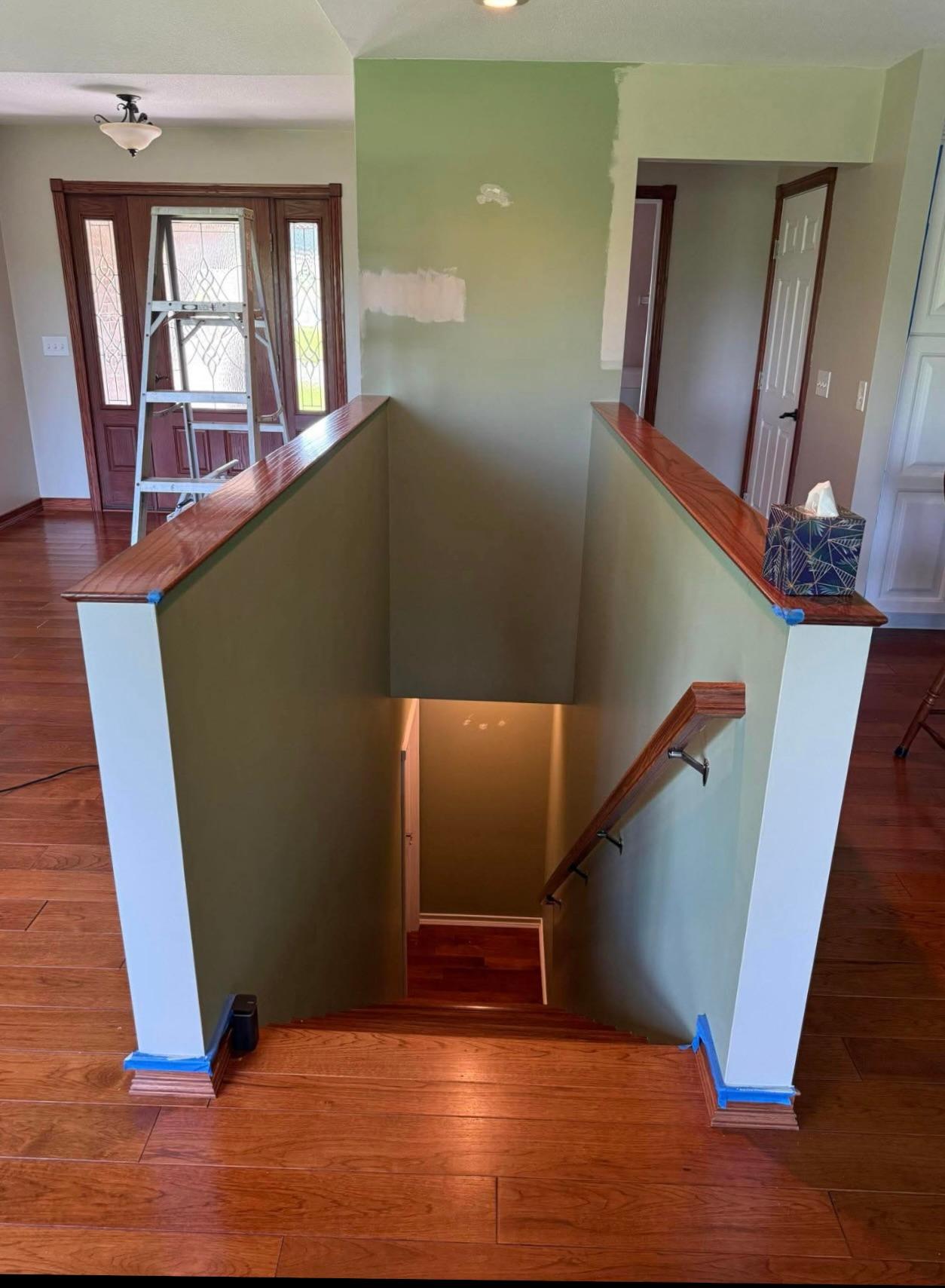
Staircases are where this gets slow. In a lot of houses the treads and handrail are stained and everything else is painted, so every spindle has to be cut in where it meets the rail and the tread. Tape helps on long runs, but around turned spindles and a curved rail a steady brush is faster and cleaner. The stairwell in our project photos went from green walls to a warm neutral, with each edge along the handrail and hardwood cut by hand.
From the job site
Stairwell repaint
Green walls swapped for a warm neutral. Every edge along the handrail and hardwood was cut by hand.
Drag the handle, or focus it and use your arrow keys.
Interior panel doors and steel entry doors
Six-panel interior doors get painted in a set order: panels first, then the rails and stiles, so brush marks follow the joints in the door instead of crossing them. Edges get painted too, since that’s what you see when the door swings open. Hinges come off or get masked so you don’t end up with painted hardware that binds.
Exterior steel doors need different prep. Any rust spot gets sanded to bare metal and spot-primed with a rust-inhibiting primer, or it blooms back through the new paint. Fiberglass needs a light scuff and a primer made for slick surfaces. The gray front door in our photos started as dated brown steel. It was masked, primed and painted smooth. Strong afternoon sun on a south or west entry is hard on dark colors, so we’ll bring that up if you’re leaning toward black or navy.
“Evan did a great job on our half bath. Looks amazing! Check him out for clean and efficient painting. He worked on our basement and from his skills, we hired him for the bath. Definitely recommend!”
 AbbeyBasement and half bath
Choosing an enamel that stands up to scuffs
Trim and doors should be glossier than the walls. Semi-gloss is the usual choice: it wipes clean, shrugs off shoe scuffs and gives a crisp line where trim meets an eggshell wall. Satin is softer looking, still cleans well, and hides small dents on doors better than a high shine.
Enamels level out as they dry, which hides brush marks, but they stay soft for a while. Baseboards and stair risers scuff easily for the first couple of weeks, so go easy with the vacuum and keep furniture off fresh trim. Fireplace mantels and surrounds get the same enamel; the inside of a firebox needs a high-heat paint, which is a different product entirely.
In older homes around Jasper and Ferdinand, a lot of original trim is stained oak or pine. Painting it is a one-way decision, since going back to bare wood means stripping, so it’s worth talking through first. If you go ahead, stained trim needs cleaning, a scuff sand and a stain-blocking primer, because knots and tannins in the wood can bleed yellow through white paint.
More from our jobs
All projects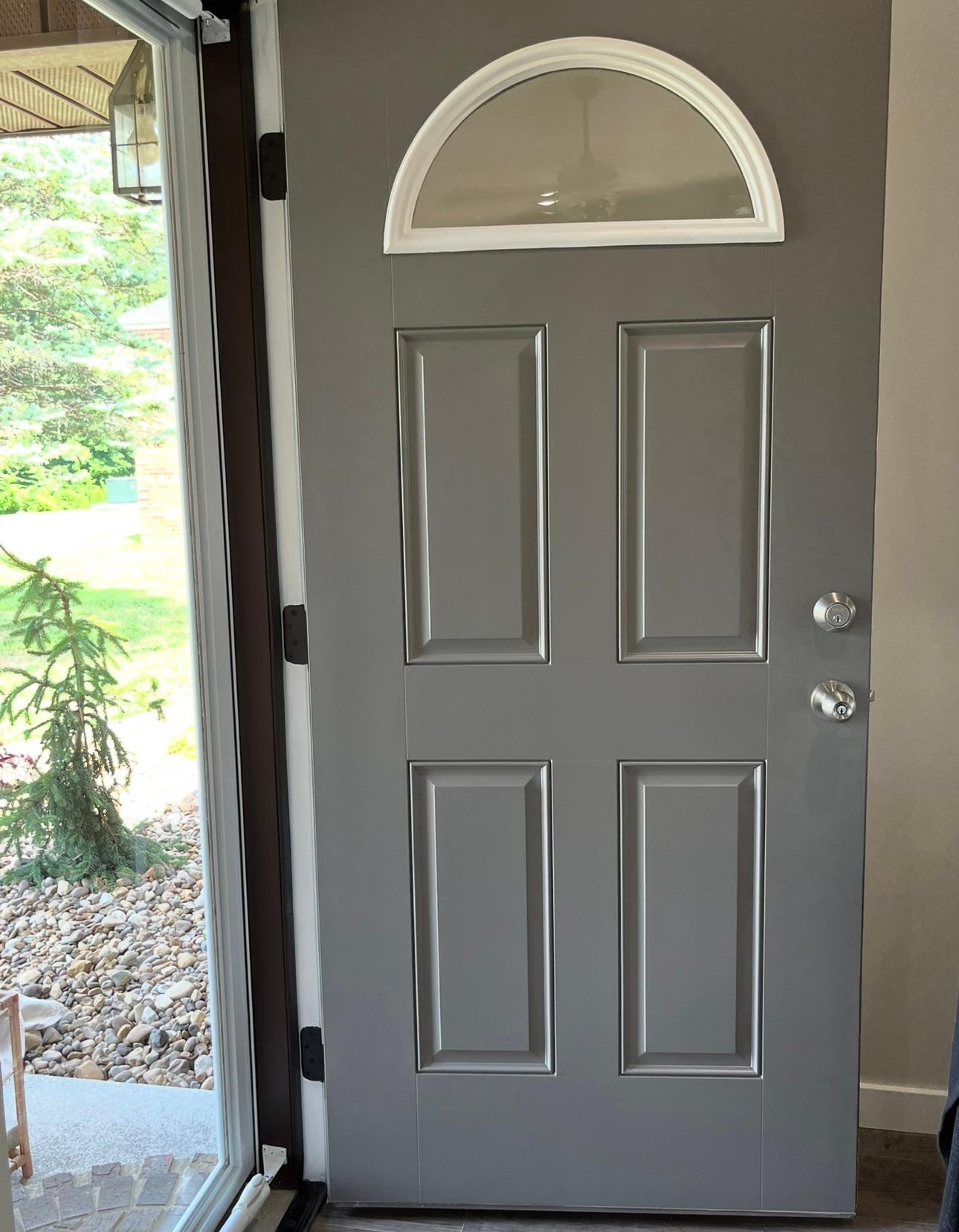
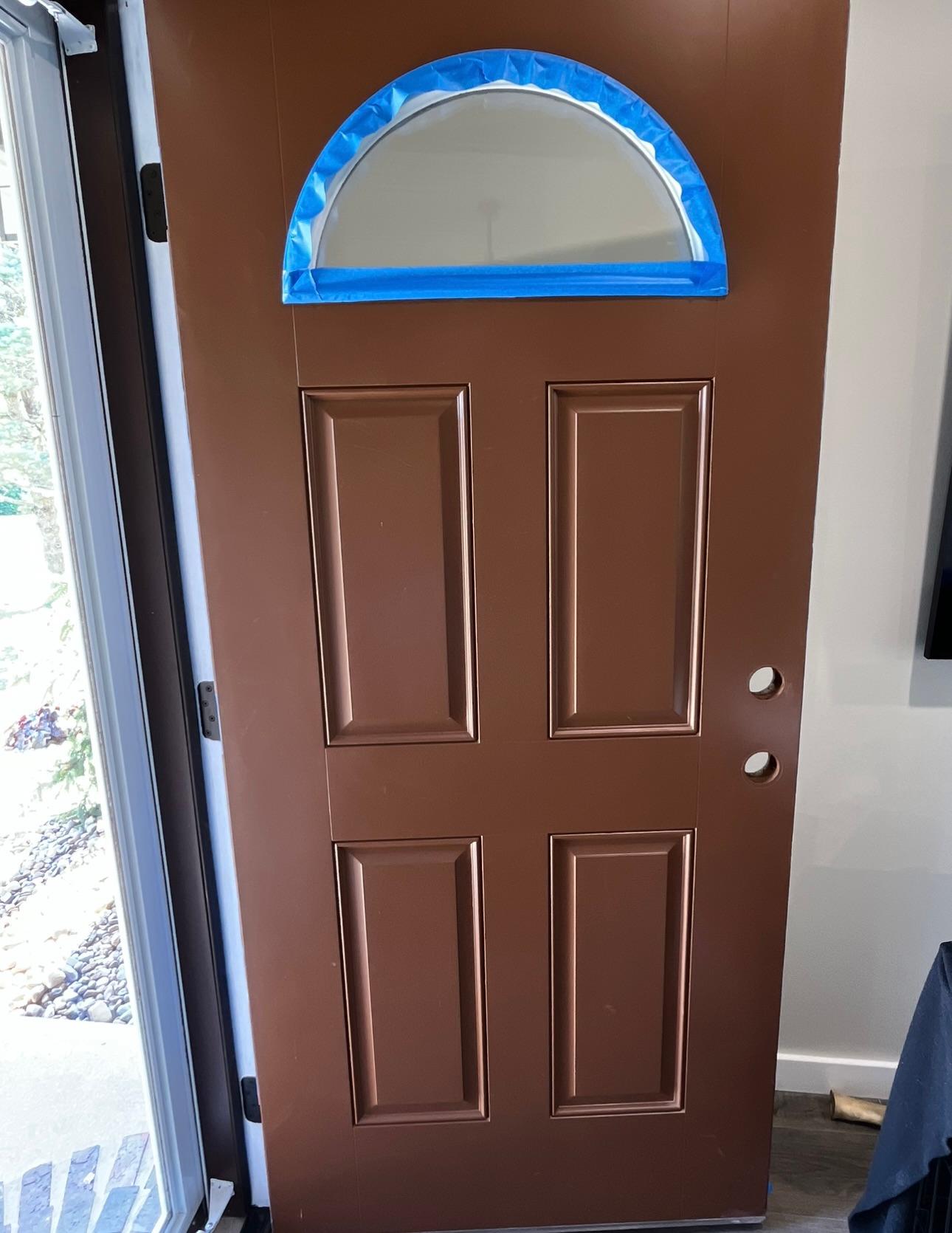
Front door color change
A dated brown steel door masked, primed and painted a modern gray with a smooth finish.
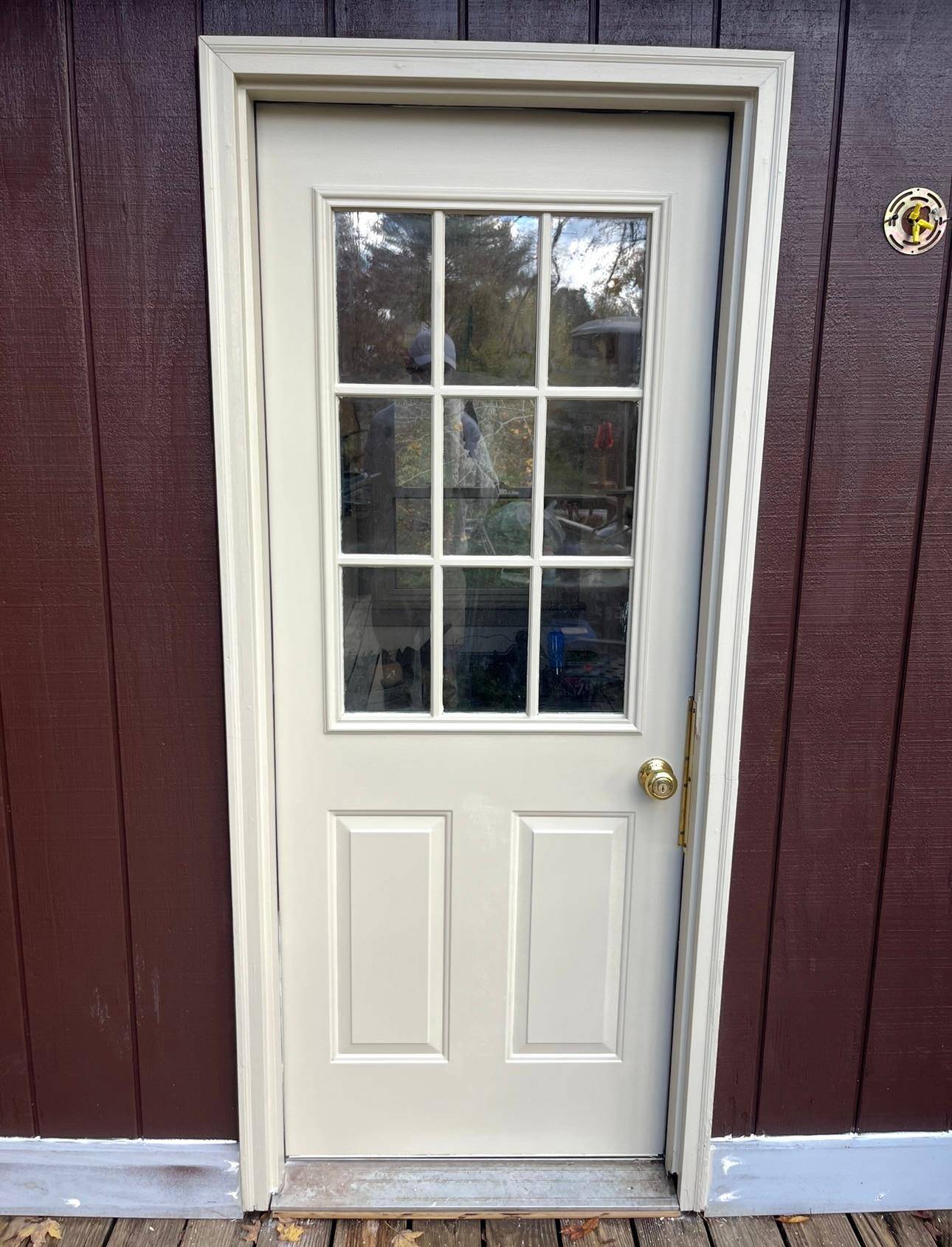
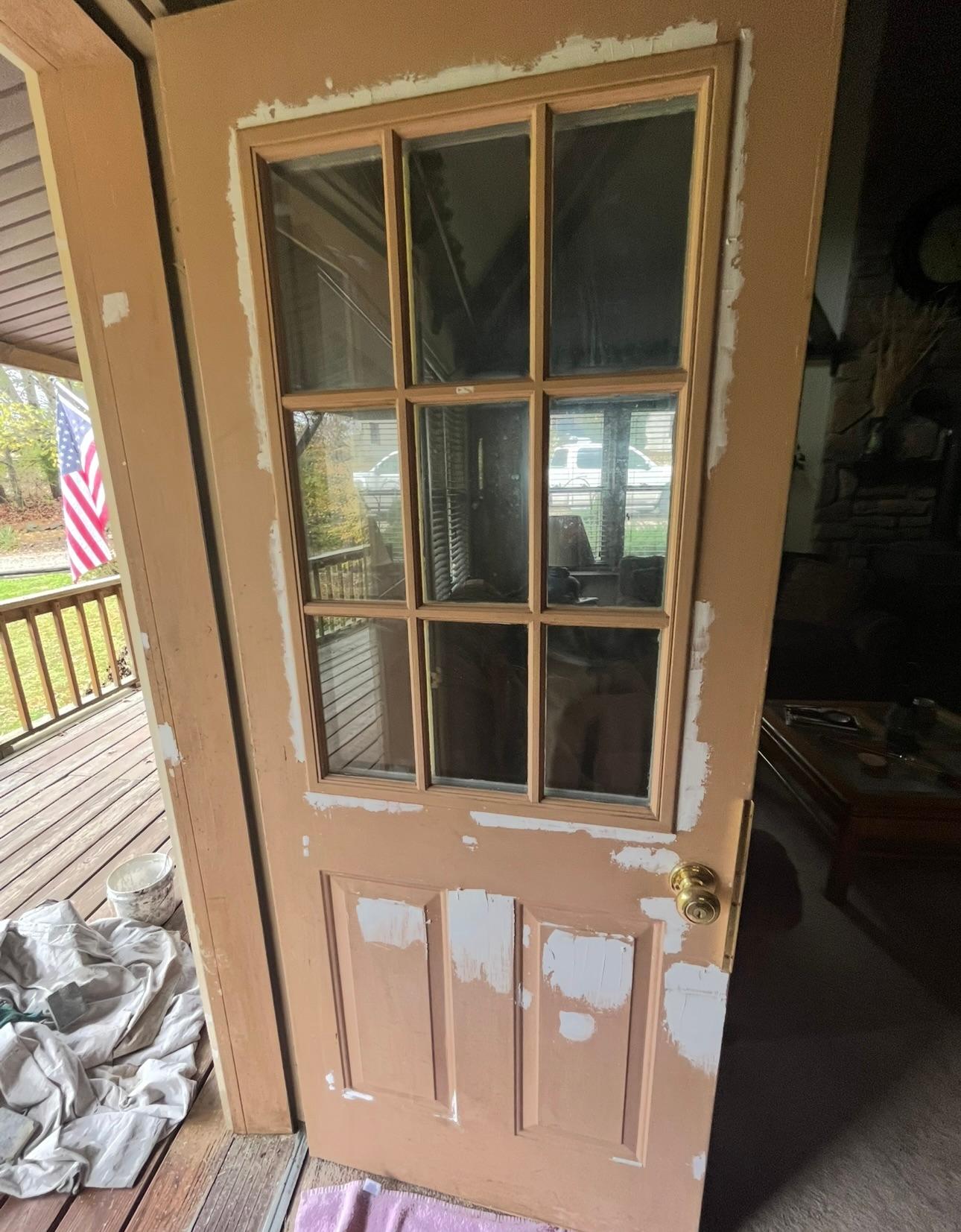
Back door repaint
Peeling paint scraped and sanded smooth, then painted white to stand out against dark siding.
How it works
Trim, Door & Staircase Painting, start to finish
- 01
Look at the trim with you
At the free estimate we go over the trim, doors and stairs, note gaps and damage, and talk about sheen and color. A single door is a fine size for a job.
- 02
Clean, sand and caulk
Trim is wiped down to remove dust and hand oils, scuff-sanded so new paint grips, and dings are filled. Open joints and cracked caulk get recaulked.
- 03
Prime and cut in
Bare wood, filled spots, stained trim and rust on steel get primer. Walls, floors and stained rails are masked or cut in by hand.
- 04
Enamel coats and walkthrough
Two coats of enamel go on with drying time between them. Hardware goes back on, we clean up, and we walk through it with you.
Yes. Trim and doors can be done on their own, and it’s a common job when the walls are still in good shape. We cut the trim in carefully against your existing wall color. If the walls need painting soon anyway, doing both together usually saves time, since the line between them only gets cut once.