New Construction Painting
New construction painting in Jasper and Dubois County
Painting a new house goes fastest while the rooms are empty, but bare drywall and a steady stream of other trades make it its own kind of job. We paint new homes and additions around Jasper for builders and homeowners, starting with primer on fresh mud and tape and finishing with touch-ups after the flooring, cabinets and fixtures are in.
New Construction Painting in Jasper, Huntingburg, Ferdinand, Dale, Holland and across Dubois County.
Scope
What’s included
Every estimate spells out the surfaces, the prep and the cleanup, so you know what you’re paying for.
- 01Primer on new drywall, mud and tape
- 02Ceilings and walls, sprayed or rolled
- 03Trim, doors and window casings
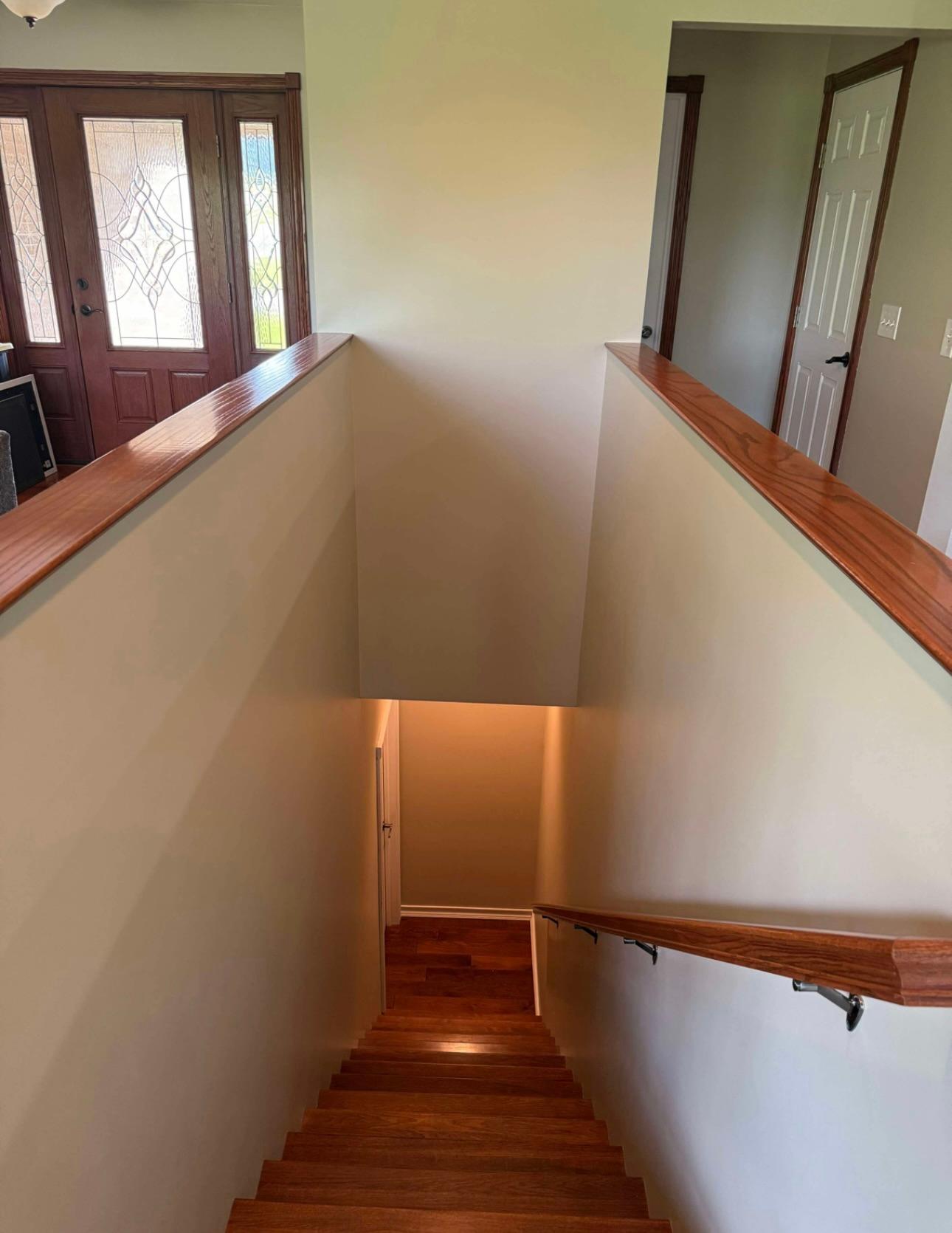
- 04Staircases, rails and built-ins
- 05Shiplap, accent walls and tall great rooms
- 06Touch-ups after flooring and fixtures go in
- 07Help choosing colors early in the build
- 08A written list of every color and sheen used
Why bare drywall gets primer before any color
New drywall is really two surfaces. The paper face and the joint compound over the seams and screws soak up paint at different rates, and if color goes straight on, the seams show through as dull stripes when light hits the wall from the side. Painters call it flashing. A coat of drywall primer, usually a PVA primer made for new drywall, seals both surfaces so the finish coats dry to an even sheen.
Primer also shows you what the bare wall was hiding. Once a room is one even color, ridges at the tape joints, nail pops and sanding scratches stand out. Small ones get filled and spot-primed. Anything bigger goes back to the drywall finisher, and it’s easier to have them handle it now than after the walls are painted.
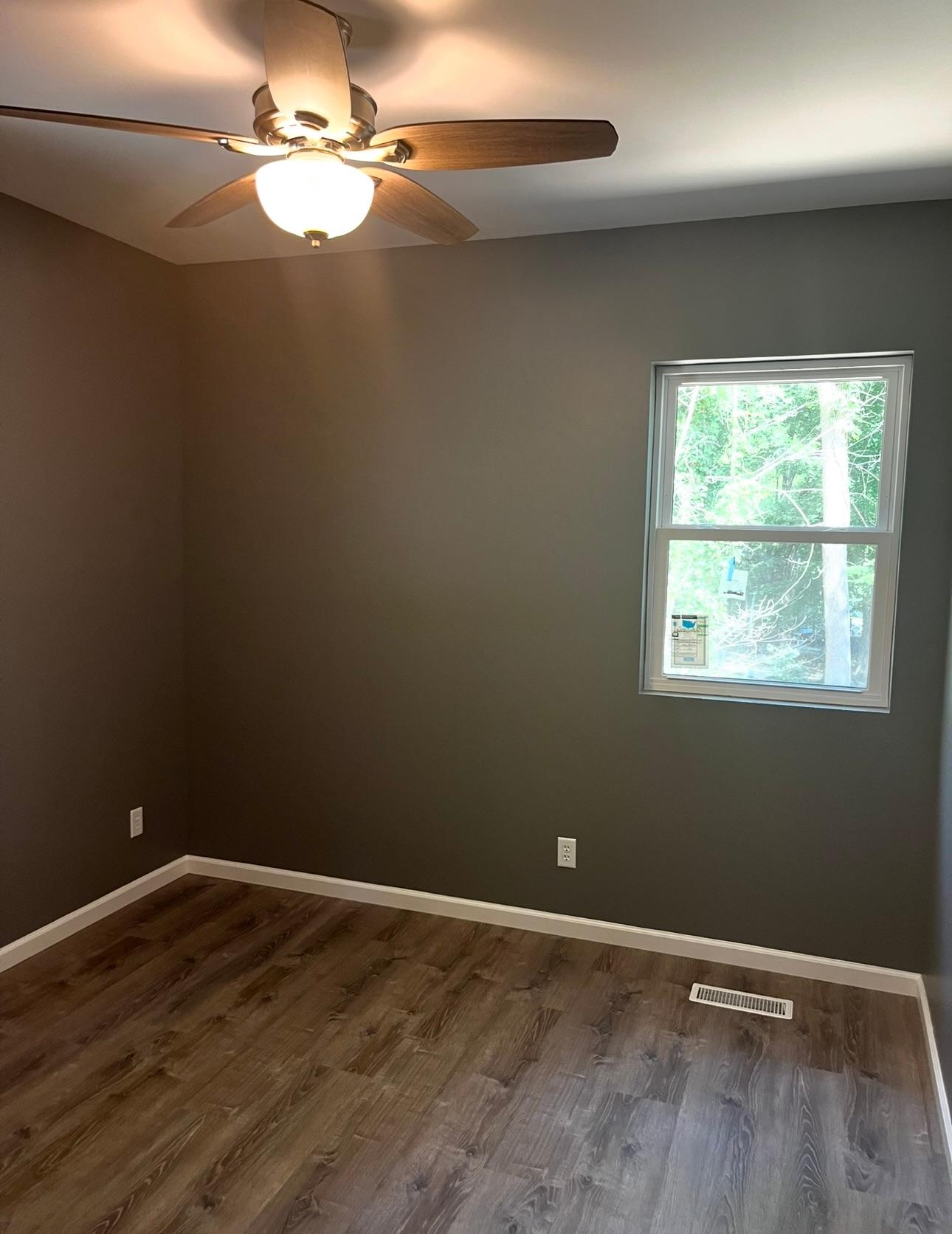
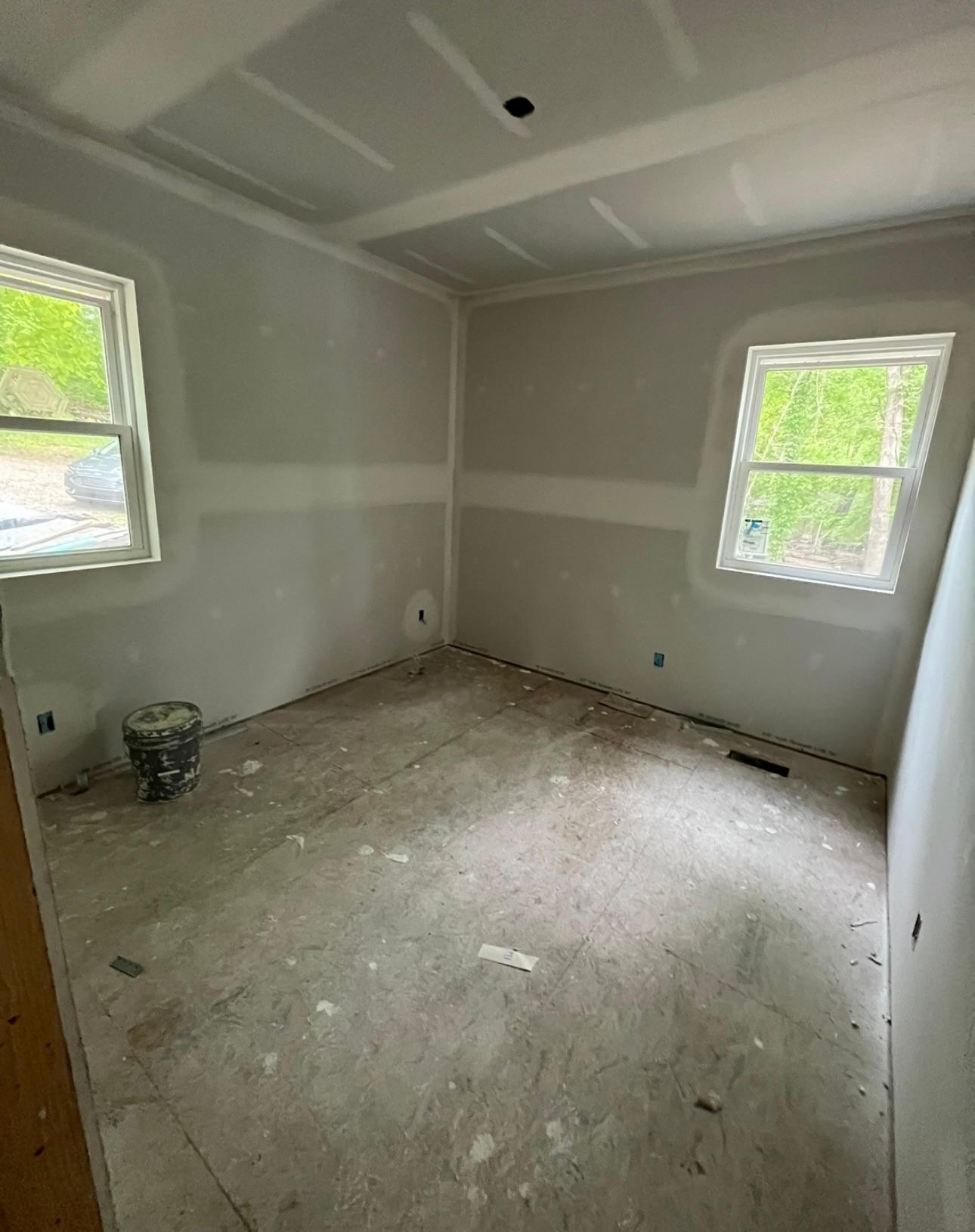
The bedroom in our project photos went that route: bare taped drywall, primer, then a warm taupe with a white ceiling and clean lines at the trim.
From the job site
Bedroom, new drywall to finished
Bare drywall primed, then painted a warm taupe with a bright ceiling and clean trim lines.
Drag the handle, or focus it and use your arrow keys.
Spraying empty rooms, and when the trim gets painted
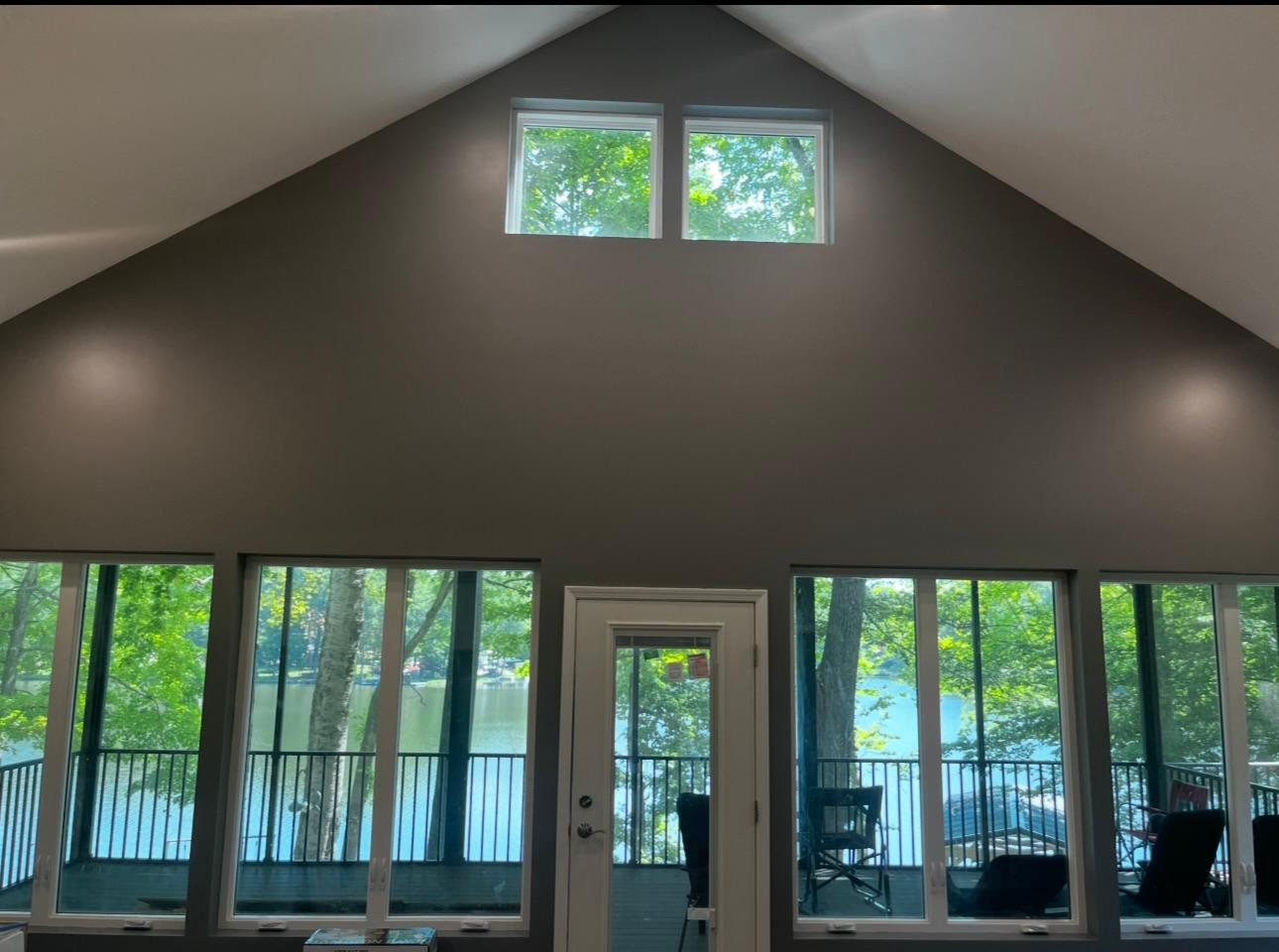
An empty house is the best time to spray. With no furniture and the floors bare or covered, ceilings and walls go on quickly and evenly, and back-rolling the first wall coat works the paint into the drywall texture. Rolling still makes sense for accent walls, cut lines and anything painted after the flooring is down. Tall great rooms and vaulted ceilings get scaffolding so the cut line along the ceiling stays straight, like the cathedral-ceiling room in our photos.
Trim and doors take the most handling, so they get a harder-wearing satin or semi-gloss enamel. New trim gets nail holes filled and joints caulked before the finish coats, and doors often come off their hinges to be sprayed, which leaves a smoother finish than brushing them in place. Painting trim before the flooring goes in saves masking, painting after leaves a cleaner edge at the floor, and it’s worth deciding which with your builder early.
“We had an amazing experience with EJ Paints during our new build. They were very professional, detail-oriented, and did it all in a timely manner. They answered any questions we had and always got back with us right away.”
 EliseNew construction
Keeping pace with the builder and the other trades
Painting sits in the middle of the build. It can’t start until the drywall finisher is done and the mud is dry, and it has to be far enough along before cabinets, countertops and flooring arrive. There’s plenty of new construction around Jasper and Huntingburg, and build schedules shift when one trade runs late, so we stay in touch with the builder as the dates move.
Pick colors early, ideally while the drywall is still going up, so paint can be ordered and deep colors can get a tinted primer. A chip the size of a business card looks different on a twelve-foot wall in your actual light, so paint a few large samples on primed drywall and look at them morning and evening before you commit.
The last pass is touch-ups. Electricians, plumbers, cabinet installers and flooring crews all leave marks, so we plan a touch-up round after they finish. When the job wraps up, you get a written list of every color and sheen by room. Keep it with the house papers so whoever fixes a dinged wall a few years from now knows exactly which white went on the trim.
More from our jobs
All projects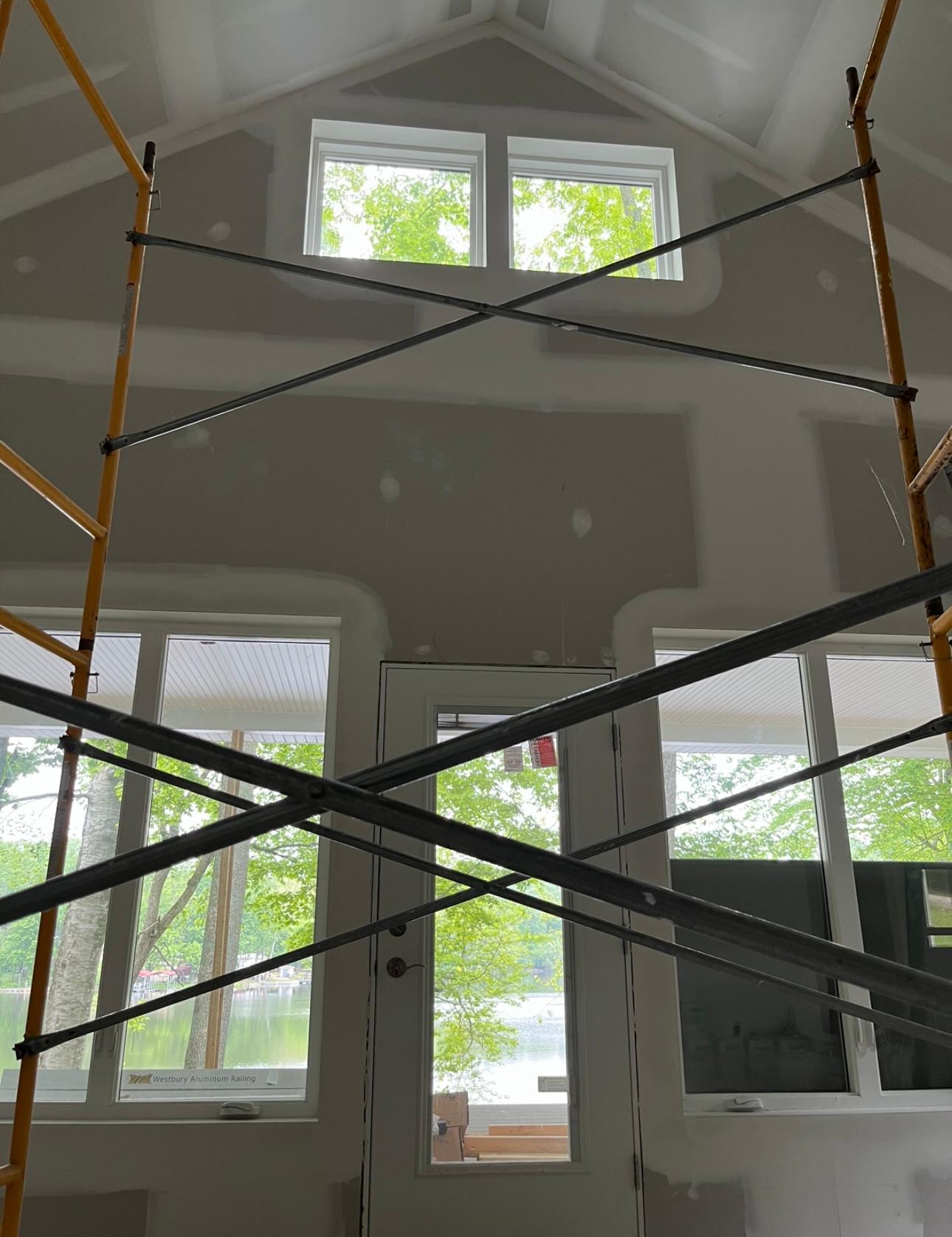 BeforeAfter
Cathedral ceiling great room
Scaffolding up, tall walls cut in clean against the ceiling line, and a deep gray wall to anchor the room.
How it works
New Construction Painting, start to finish
- 01
Walk the plans or the site
We meet with you, your builder or both, look at the plans or the framed house, and talk through colors, sheens and where painting falls in the schedule. The estimate is free.
- 02
Prime and check the drywall
Bare drywall gets primer first. Then we look the walls over in side light, fill small flaws and flag anything bigger for the drywall finisher.
- 03
Finish coats on ceilings, walls and trim
Ceilings and walls are sprayed or rolled depending on the room and the timing. Trim and doors are painted in the order you and the builder settled on, before or after flooring.
- 04
Touch-ups, walkthrough and a color list
After the other trades finish, we touch up what they marked, clean up and walk the house with you. You keep a written list of every color and sheen used.
As soon as you know when the drywall will be finished. Painting starts after the last coat of mud is sanded and dry, and the exact order around trim, cabinets and flooring depends on how your builder runs the job. Getting on the schedule early gives everyone time to pick colors and plan the sequence instead of squeezing paint in at the end.