Exterior Painting
Exterior house painting in Jasper and Dubois County
Exterior paint fails at the edges first: the bottom of a clapboard, a window sill, the porch step everyone uses. We scrape, caulk and prime those spots before any color goes on, then paint siding, trim, shutters, doors and porch floors with coatings made for each surface. Estimates for homes around Jasper are free.
Exterior Painting in Jasper, Huntingburg, Ferdinand, Dale, Holland and across Dubois County.
Scope
What’s included
Every estimate spells out the surfaces, the prep and the cleanup, so you know what you’re paying for.
- 01Wood, vinyl and fiber cement siding
- 02Painted brick and stucco
- 03Trim, soffits and fascia
- 04Shutters and front doors
- 05Porch floors, steps and concrete
- 06Scraping, sanding and caulking
- 07Primer on bare wood and metal
- 08Full cleanup and a final walkthrough
Scraping, caulking and priming before the first coat
Most of the hours on an exterior job go into work that doesn’t show in the finished photos. Loose paint gets scraped back to a sound edge, and the ridges get sanded so they don’t show through the new coat. Bare wood gets primer, because topcoat on raw siding soaks in unevenly and starts to peel within a couple of seasons. Soft or rotted boards are worth replacing before they get painted, and we’ll show you any we find.
Caulk goes where trim meets siding, around window and door casings, and into the butt joints of lap siding. Southern Indiana winters freeze and thaw over and over, and each cycle pulls old caulk a little further from the wood until water gets behind the trim. The bottom edge of each siding lap stays open so moisture can drain out of the wall.
Different surfaces need different paint. Brick and stucco need a masonry coating that lets moisture pass through instead of trapping it, and vinyl needs a paint made for vinyl. Plenty of older brick homes in Jasper and Ferdinand have been painted two or three times already, so we check how well the old layers are bonded before adding another.
From the job site
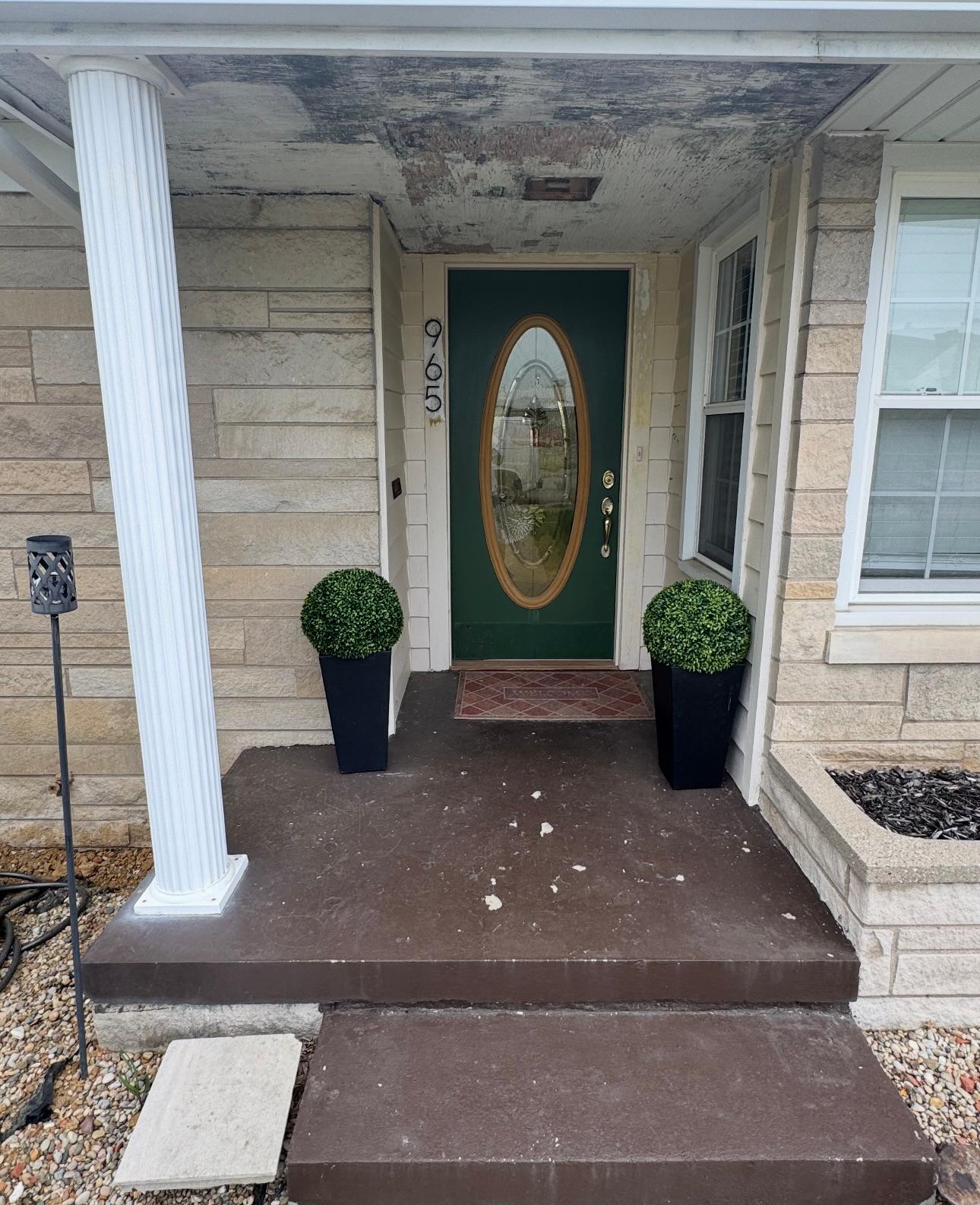
Front porch and entry
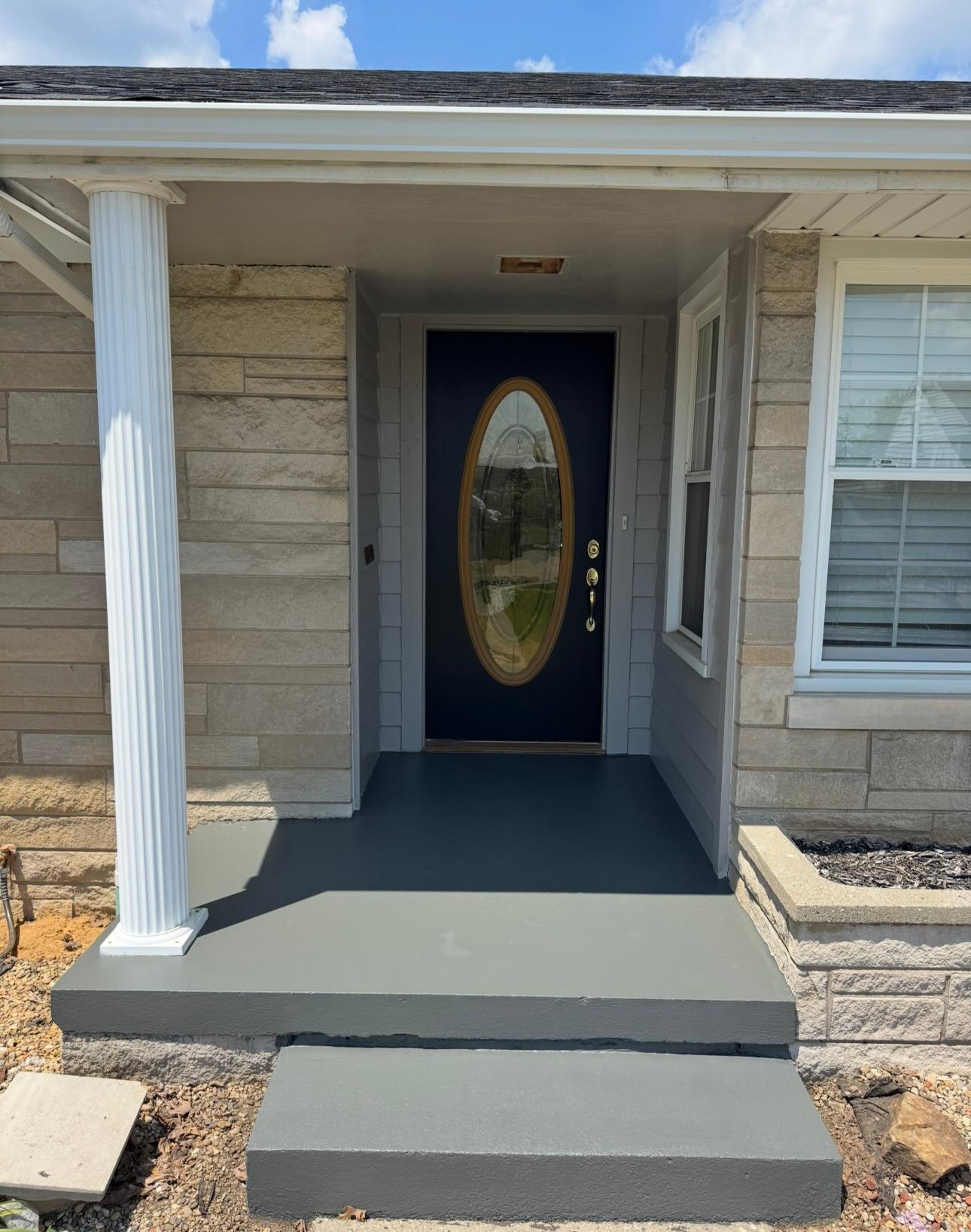
Peeling porch coating stripped back, steps recoated in gray and the front door painted navy.
Drag the handle, or focus it and use your arrow keys.
Painting season, dew and rain in southern Indiana
Most exterior paints need the air and the siding above about 50 degrees, and some are rated to go lower. Dew is the bigger problem around here. In spring and fall, siding can stay wet until mid-morning, and paint that goes onto a damp board, or catches dew before it skins over, can streak, leave sticky drips or lose adhesion. We start on walls the sun has already dried and stop early enough for the paint to set before evening.
Summer has the opposite problem. Strong afternoon sun on south and west walls heats the siding until paint dries too fast and leaves lap marks, so those walls get painted in the morning or after the sun moves off them. In Dubois County the exterior season generally runs from late April into October, with a few good weeks on either side when the weather cooperates.
Fresh latex needs a few dry hours before rain, or it can streak down the wall. If the forecast turns, the job moves a day and picks back up once the siding is dry.
“EJ Paint did a wonderful job for us. They were there in a timely manner, were polite and finished the project quickly and we couldn't tell anyone was there after they cleaned up and left. Highly recommend!”
 BetsyExterior house painting
Faded south walls, mildew on the north side, and going dark to light
Walk around most houses and the paint has aged at two different speeds. The south and west sides fade and chalk first, and you can wipe a powdery residue off with your hand. The north side stays shaded and damp through humid summers, so mildew and green algae collect there, especially behind shrubs and under trees. Both get washed off before painting: chalk keeps new paint from bonding, and mildew left under fresh paint grows back through it.
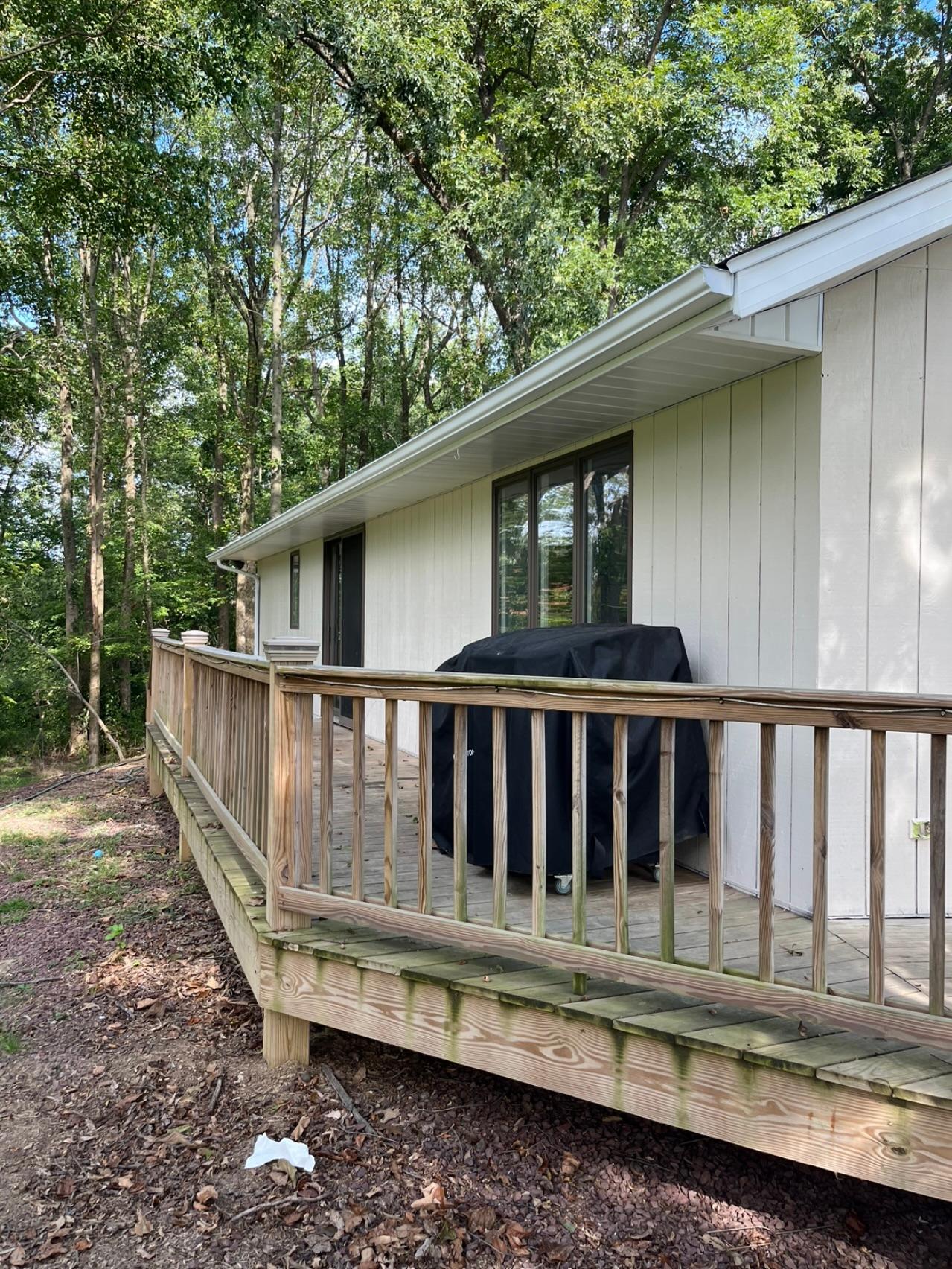
Going from a dark color to a light one takes more coverage than a repaint in the same color. The whole-house project in our photos went from dark red-brown siding to a light color with dark window trim, and that old red would have shown through a single coat. A tinted primer or two full coats of the new color is usually what gets an even finish.
Colors also look different on the house than on a chip. Paint large swatches on a sunny wall and a shaded one, and check them morning and evening before you decide. Evan can help with color coordination if you want a second opinion on body, trim and door colors that work together.
More from our jobs
All projects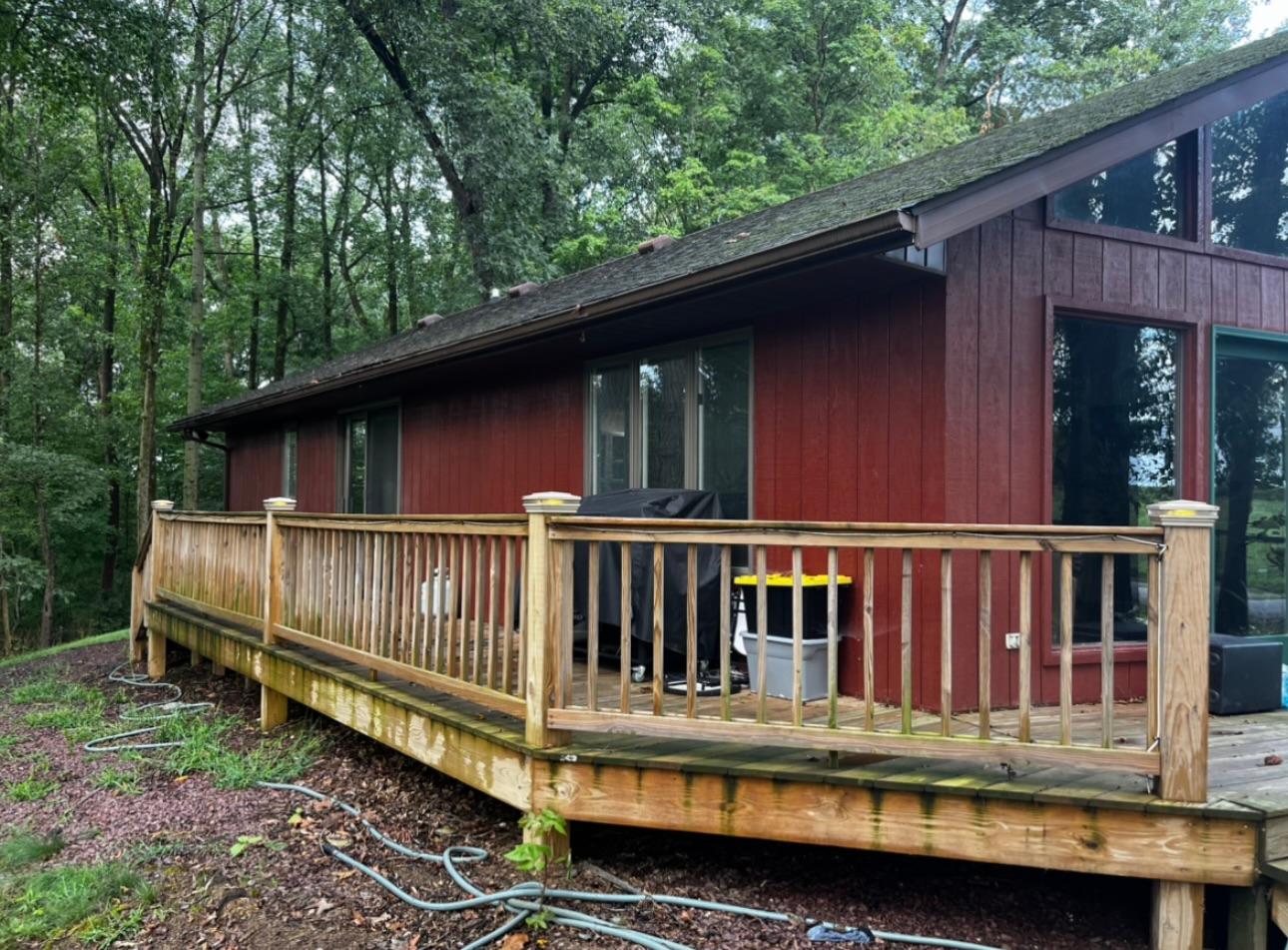 Before
 After
Whole-house exterior
Dark red siding taken to a light, modern color with dark window trim. The deck was finished to match.
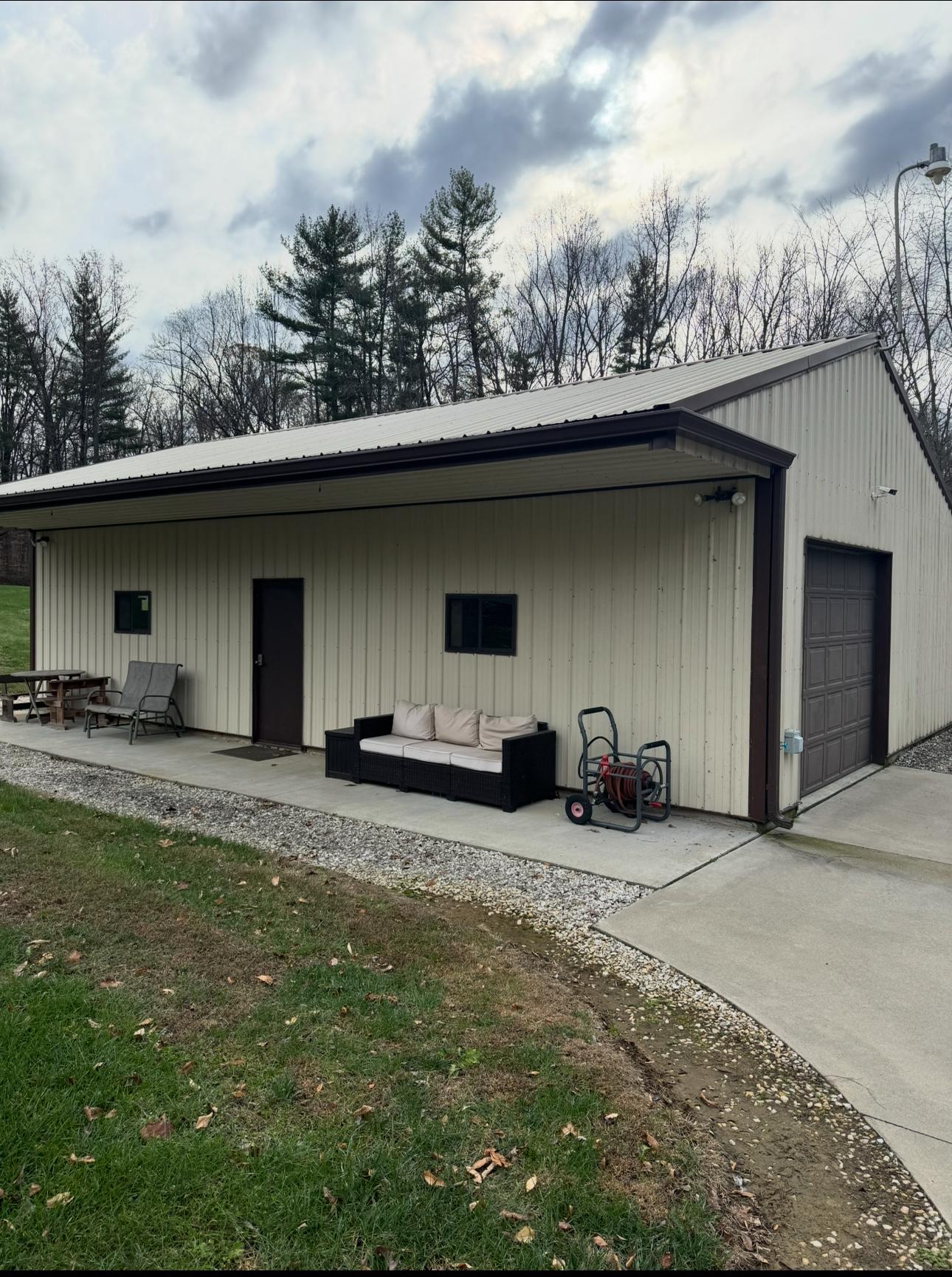 Before
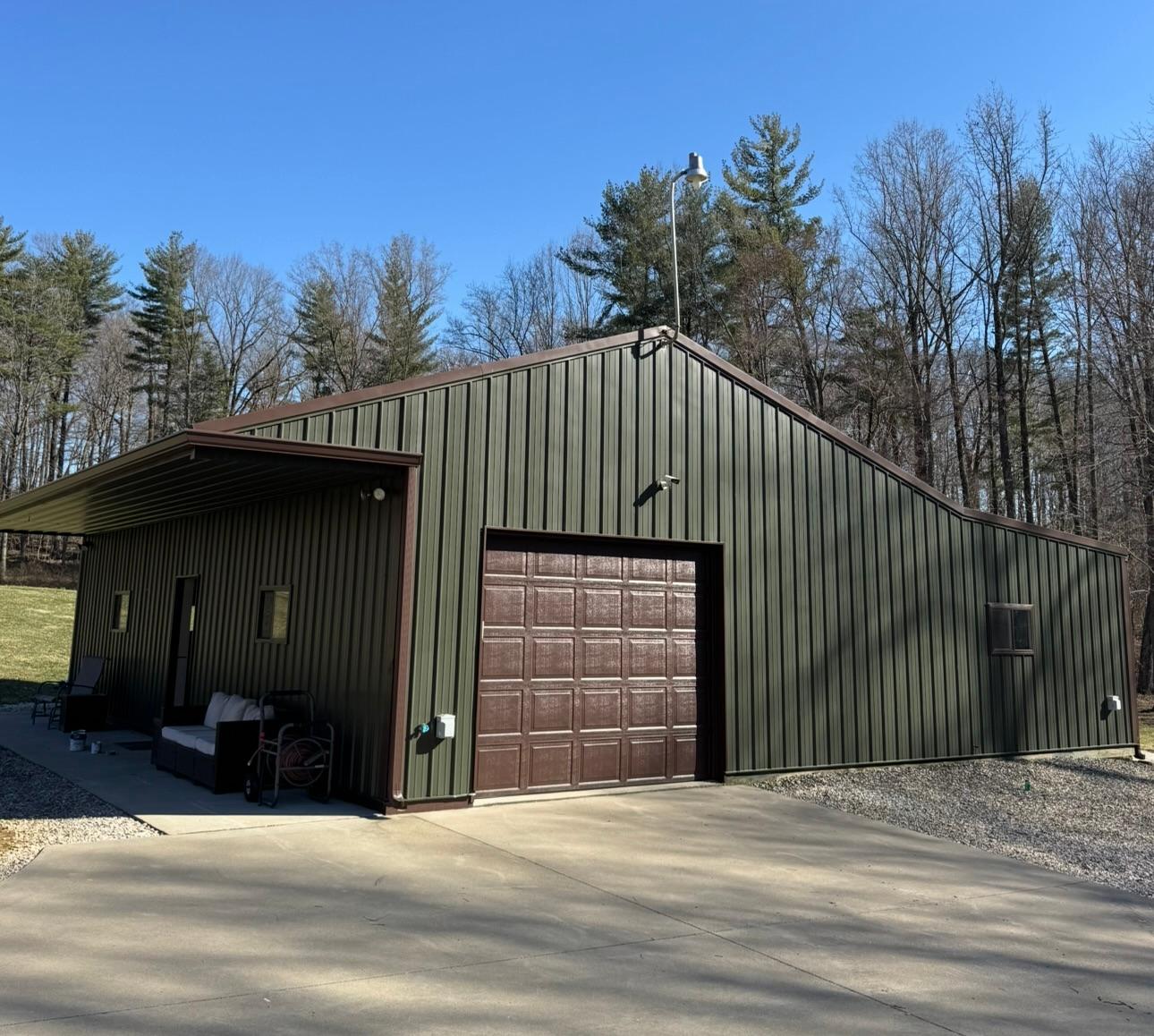 After
Detached garage
A plain beige garage repainted deep green so it sits back into the tree line.
How it works
Exterior Painting, start to finish
- 01
Walkaround and free estimate
We walk every side of the house with you, looking for peeling, chalking, mildew and soft wood, and talk through colors. Then we price the job based on the surfaces and the prep each one needs.
- 02
Wash and scrape
Siding and trim get washed to remove chalk, dirt and mildew, then left to dry. Loose paint is scraped and sanded, and bare wood is spot primed.
- 03
Caulk, mask and protect
Open joints get fresh caulk. Windows, light fixtures, walkways and plants are covered or masked so the only things getting paint are the surfaces on the estimate.
- 04
Paint, clean up and walk through
Siding goes first, then trim, doors and porch floors. When the last coat is dry we clean up, pull the masking and walk around the house with you to check every side.
On wood siding, a well-prepped paint job usually lasts seven to ten years, often less on the south and west walls where the sun is hardest on it. Trim, doors and porch floors wear faster because of water and foot traffic, so they may need a fresh coat sooner. Prep has the biggest effect: paint over chalk, mildew or loose paint fails early regardless of the product.