Deck & Fence Staining
Deck and fence staining in Jasper, Indiana
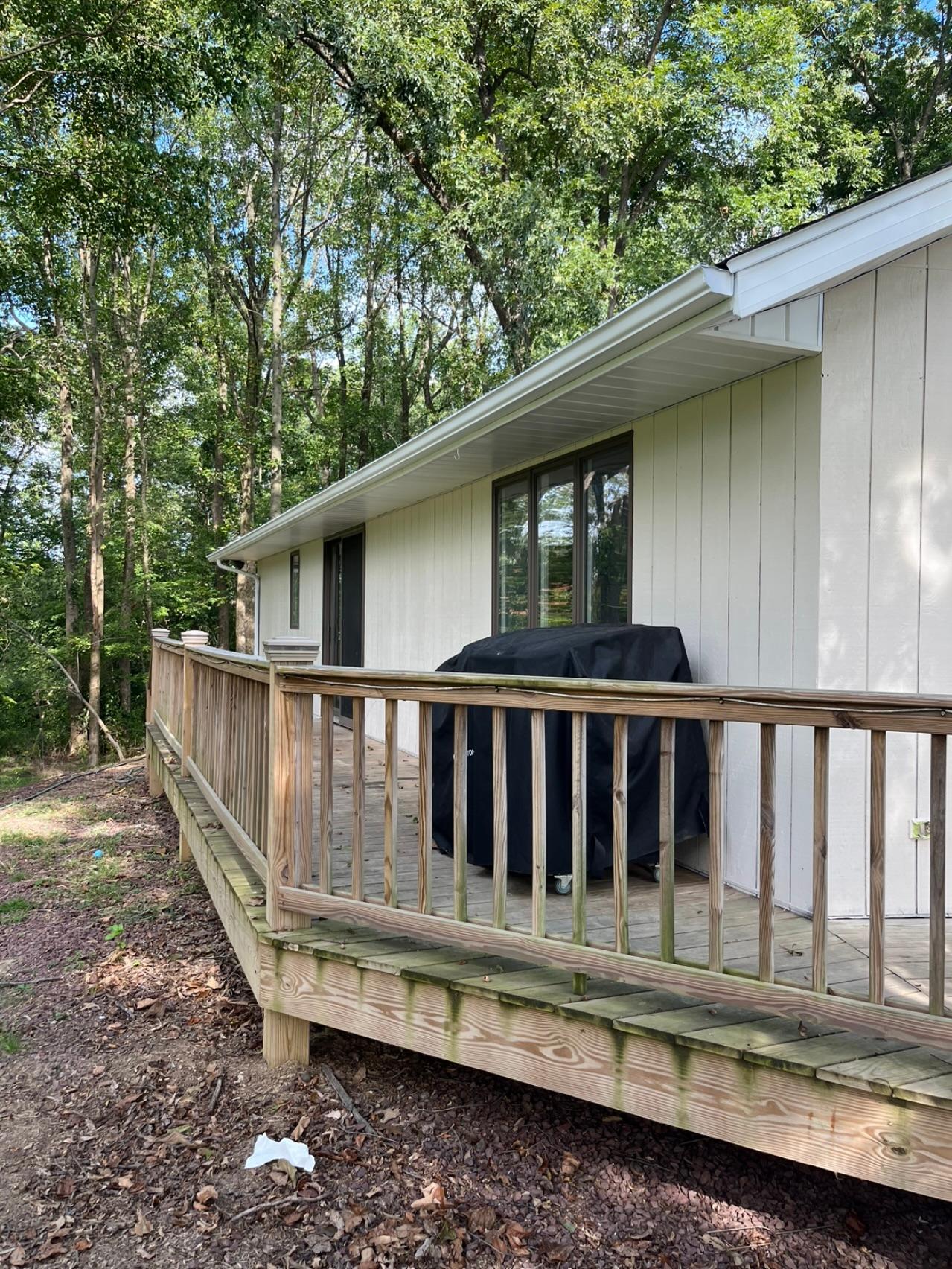
Bare wood outside in southern Indiana sits wet for weeks in spring and bakes in summer sun, and it goes gray within a season or two. We clean and brighten decks, fences, railings and pergolas, give the wood time to dry, then stain with an opacity that suits its age and condition. Estimates around Jasper are free.
Deck & Fence Staining in Jasper, Huntingburg, Ferdinand, Dale, Holland and across Dubois County.
Scope
What’s included
Every estimate spells out the surfaces, the prep and the cleanup, so you know what you’re paying for.
- 01Deck floors, stairs and railings
- 02Wood fences and gates
- 03Pergolas and covered porches
- 04Wood patios and ground-level decks
- 05Cleaning and stripping old finish
- 06Wood brightener after cleaning
- 07Sanding raised grain and splinters
- 08Transparent, semi-transparent or solid stain
- 09Covering siding, plants and walkways
Getting gray, weathered boards ready for stain
Boards that have gone silver-gray have a thin layer of sun-damaged fibers on top, and stain brushed over that layer comes off with it. A deck cleaner takes off the gray along with dirt and mildew, and a brightener afterward neutralizes the cleaner and brings the wood back toward its original color. If an old film-forming finish is peeling, it has to be stripped, or the new stain only holds where the old one already let go.
Some boards come up fuzzy after cleaning. A light sanding knocks down raised grain and splinters on handrails and stair treads, where hands and bare feet go. Popped nails should be set and loose boards fastened before any stain goes on.
Then the wood has to dry. After a wash, most decks need a couple of dry days before staining, longer in shade or after a muggy stretch. Stain over damp wood can’t soak in, so it sits on the surface and blotches or peels.
From the job site
Whole-house exterior
Dark red siding taken to a light, modern color with dark window trim. The deck was finished to match.
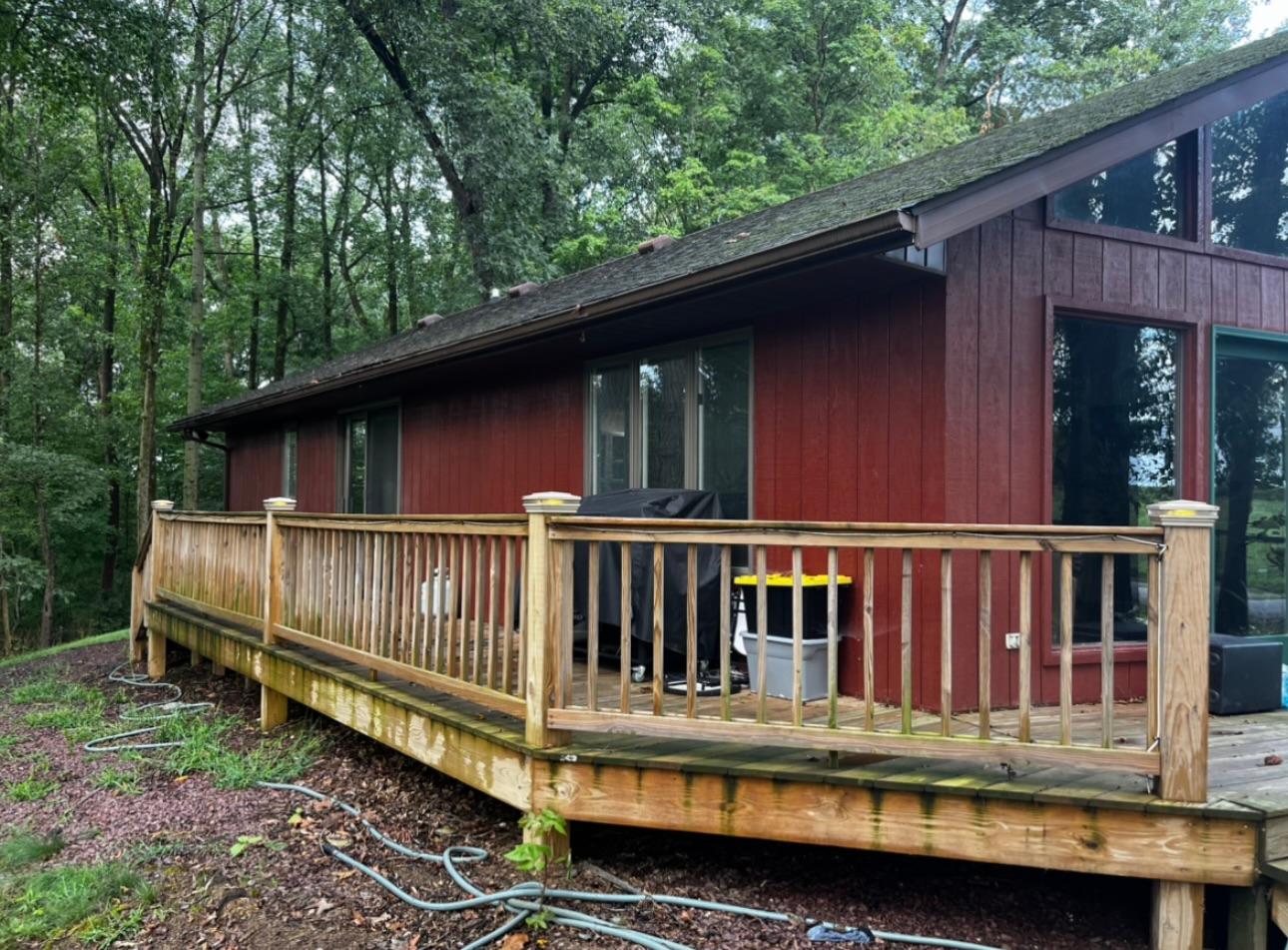 BeforeAfter
Transparent, semi-transparent or solid stain
The right opacity depends more on the wood than on taste. Transparent and lightly toned stains show all of the grain and suit newer wood in good shape, but they carry the least pigment to block UV, so a sunny deck may need a fresh coat every year or two. Semi-transparent stain has more pigment, evens out some weathering and still lets the grain read through. For most decks around Dubois County that have a few years of weather on them, it’s the best fit.
Solid stain hides the grain and covers like a thin paint. It’s the choice for older wood with patched or mismatched boards, or for covering a previous color. On walking surfaces it wears in the traffic paths and eventually peels, so it holds up better on railings, fences and skirting than on the deck floor.
For horizontal deck boards, we recommend stain over paint. Paint forms a film on top of the wood. On a flat board that holds standing water, snow and foot traffic, that film cracks, water gets under it, and it peels in sheets that have to be scraped off. Penetrating stain soaks in and wears away gradually, so recoating is a wash and a fresh coat.
“EJ Paint did a wonderful job for us. They were there in a timely manner, were polite and finished the project quickly and we couldn't tell anyone was there after they cleaned up and left. Highly recommend!”
 BetsyExterior house painting
New pressure-treated lumber and how often to re-coat
New pressure-treated lumber is still wet from the treatment process, and stain can’t soak in until that moisture works its way out. Depending on the weather, that takes a few weeks to a few months. Sprinkle some water on a board: if it beads up, the wood isn’t ready; if it soaks in within a few minutes, it’s dry enough to stain. A deck built in spring is often ready by late summer.
Indiana weather is hard on deck finishes. Summer sun breaks down stain on the tops of boards, and winter freeze-thaw cycles open small checks in the wood that let water in. As a rough guide, a deck floor with semi-transparent stain needs a maintenance coat every two to three years, while railings and fences go longer because water runs off them. Decks on shaded, wooded lots, which are common out around Ferdinand, stay damp and grow mildew, so a yearly wash helps the stain last.
The same water test tells you when it’s time. Once water soaks into the boards instead of beading, the stain has worn through, and recoating is a wash and one coat. Wait until the boards go gray again and you’re back to cleaning, brightening and sometimes stripping.
How it works
Deck & Fence Staining, start to finish
- 01
Look at the wood
We check the age of the boards, any old finish, soft spots, and how much sun and shade the deck or fence gets. That decides how it gets cleaned and which stain makes sense. The estimate is free.
- 02
Clean, strip and brighten
Gray wood, mildew and failing finish come off with a cleaner or stripper, followed by a brightener. Siding, plants and walkways nearby are wet down or covered first.
- 03
Dry and sand
The wood dries for a couple of days, longer after rain. Raised grain gets sanded, with extra time spent on handrails and stair treads.
- 04
Stain and walk through
Stain goes on a few boards at a time, end to end, and gets back-brushed so it doesn’t puddle. We clean up and look over the finished deck or fence with you.
Usually a few weeks to a few months after it’s built, once the lumber has dried. Fresh treated wood is still wet from the treatment process and won’t absorb stain. Sprinkle water on a few boards: if it beads, wait; if it soaks in within a few minutes, the deck is ready. Kiln-dried treated lumber can often be stained sooner.