Custom Murals
Custom murals for homes and businesses in Jasper
A mural works best when it’s built around the room it’s in. We design and paint murals for basements, kids’ rooms, playrooms and business walls around Jasper, usually starting from colors you already have in the carpet, the furniture or the trim. You see a sketch or mockup and sign off on it before any paint goes on the wall.
Custom Murals in Jasper, Huntingburg, Ferdinand, Dale, Holland and across Dubois County.
Scope
What’s included
Every estimate spells out the surfaces, the prep and the cleanup, so you know what you’re paying for.
- 01Basement and rec room walls
- 02Kids’ rooms and playrooms
- 03Business lobbies, break rooms and shop walls
- 04Geometric and tape-line designs
- 05Simple painted shapes, stripes and color blocks
- 06Design built from your room’s existing colors
- 07Sketch or mockup for your approval first
- 08Filling, sanding and priming before layout
- 09Clear protective coat for high-touch areas
Designing a mural around the colors already in the room
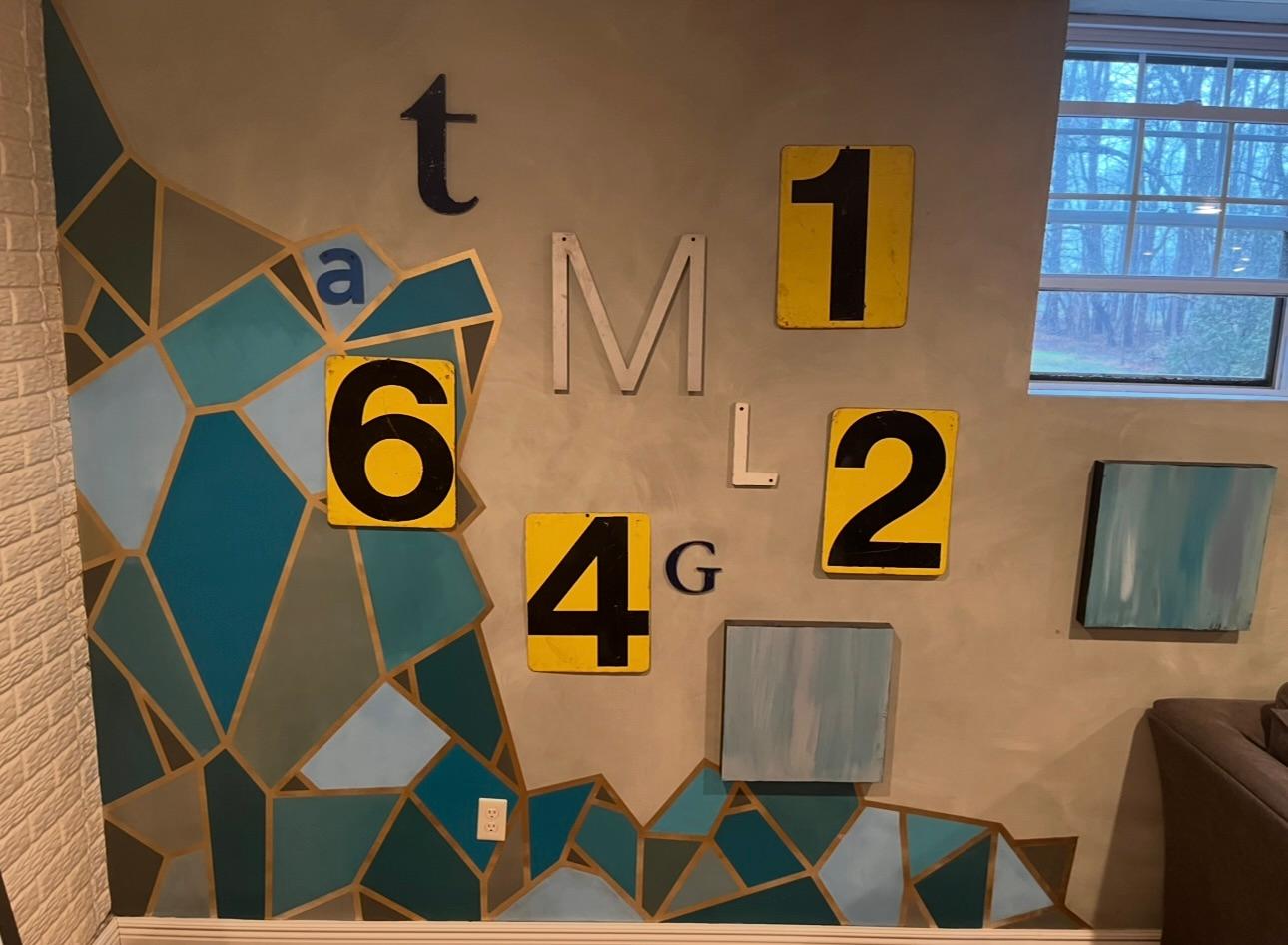
We start with what isn’t changing. In a basement that might be the carpet, a sectional, the bar top or the trim color. We pull a handful of colors from those and build the design around them, so the wall ties the room together instead of fighting it. Laurie’s basement mural, designed and painted by Evan and Joel, worked that way, and in her words it “incorporated the colors of our basement”.
Next comes a sketch, or a mockup laid over a photo of your wall. Geometric designs can be worked out on paper with measurements. Anything with painted shapes, like hills or a skyline for a kid’s room, is easier to judge as a mockup at the right scale. Mark where the TV, shelves, outlets and switches go, since a busy section behind a television competes with it.
Nothing gets painted until you approve the design. Moving a line or swapping a color on a sketch takes a few minutes, while on the wall it means repainting and waiting out dry time again, so it’s worth living with the mockup for a few days before you say yes.
From the job site
Basement mural
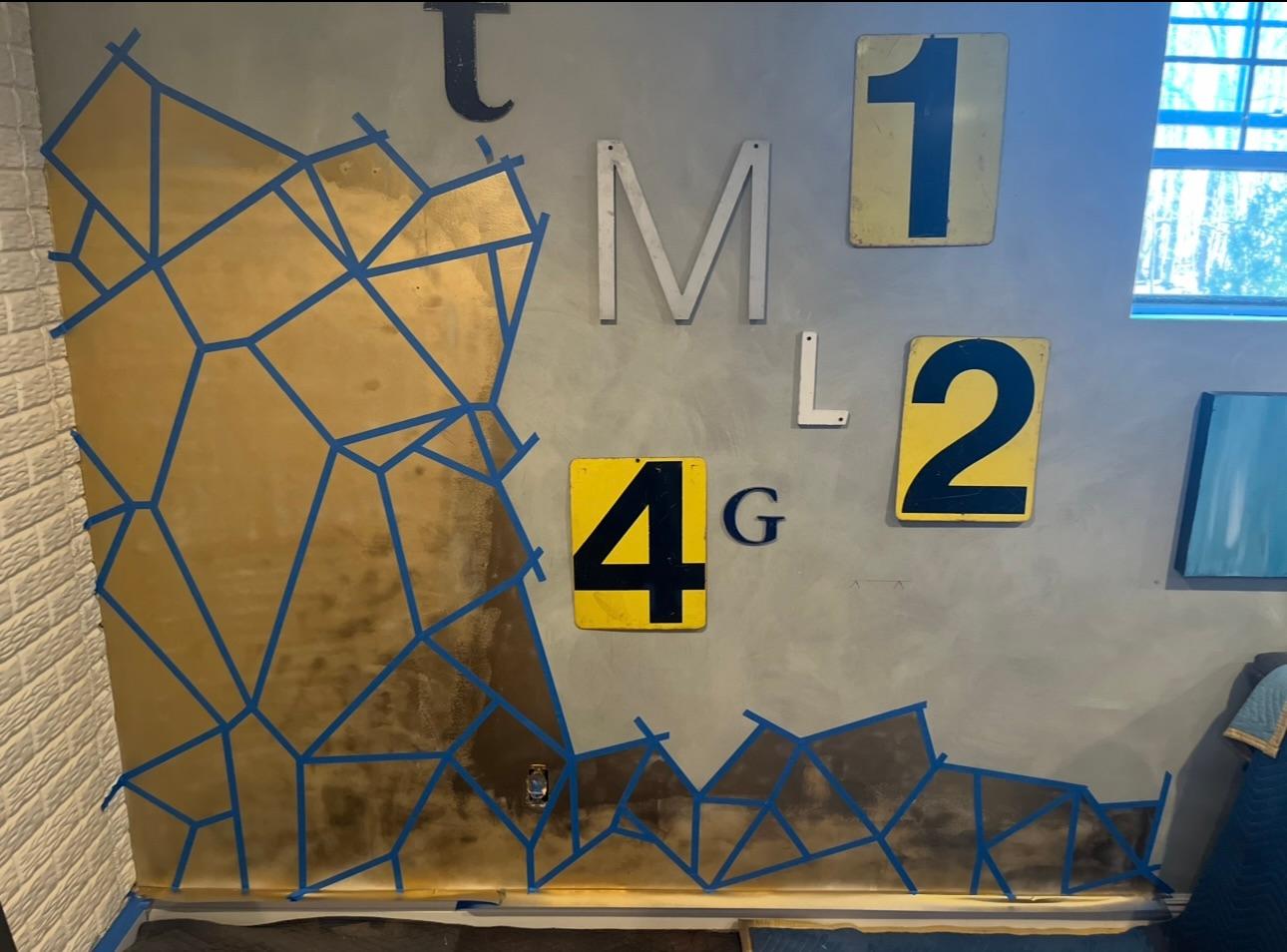
A geometric mural designed around the colors already in the basement, taped out and painted by hand.
Drag the handle, or focus it and use your arrow keys.
Taping, layering and keeping the lines crisp
Geometric and tape-line murals are mostly layout and patience. The base color goes on first and dries fully. Then the design is measured and marked with a level, and painter’s tape goes down along every line. The before photo of our basement mural shows that stage, with the geometric outlines taped out on the wall.
Clean edges come from sealing the tape. The edge gets pressed down firmly, then a thin coat of the color underneath is brushed along it. Any bleed is the same color as the wall, and the next color stops at a sharp line. Lighter colors usually go on first and darker ones over them, because dark covers light far more easily than the reverse.
Each color has to dry before tape goes over it again, or the tape can pull the fresh paint off. Wall texture matters too. Smooth walls give the crispest lines. Orange peel and light knockdown can be taped well with extra care, but a ruler-straight edge across heavy texture isn’t realistic, and we’ll tell you that during the design stage.
“Evan and Joel did an amazing job with communication and answering our questions. The mural they designed and painted exceeded our expectations. It incorporated the colors of our basement and looks perfect.”
 LaurieCustom basement mural
Wall prep and protecting the finished mural
Before any layout, the wall gets the same prep as any paint job. Nail holes and small dents are filled and sanded, glossy old paint is scuffed so the new coat grips, and filled spots are primed so they don’t show through. Basement walls need a closer look. Painted block or poured concrete with damp spots or white, powdery efflorescence has a moisture problem, and paint over it will eventually peel.
In playrooms, hallways and anywhere hands and toys hit the wall, a clear protective topcoat makes a mural easier to wipe down. It isn’t always needed. A good washable wall paint holds up fine in most bedrooms, and some clear coats yellow over time, which shows on white and cream. When a clear coat makes sense, a water-based one stays clearer, and its sheen can be matched to how you want the wall to look.
How it works
Custom Murals, start to finish
- 01
Look at the wall and the room
We measure the wall, take photos and note the colors you’re keeping. You can also text photos to (812) 912-0814 to get the conversation started.
- 02
Sketch or mockup for approval
You get a design drawn to the wall’s proportions in your colors. We adjust it until it’s right, and painting waits until you approve it.
- 03
Prep, base coat and layout
Nail holes are filled, and the wall is sanded and primed where needed, then base-coated. The design is measured onto the wall and taped.
- 04
Paint in layers and clear coat
Colors go on in layers with dry time between them. A clear coat goes on where it makes sense, then we clean up and look over the finished wall with you.
No. A photo you liked, a color you want to keep or a rough idea like something geometric for the basement is enough to start. We’ll look at the room, pull colors from what’s already there and come back with a sketch or mockup. If you do have a design, bring it, and we’ll work out how it fits your wall’s size and texture.